Search for "brachytherapist salary" and you will find confident numbers with no source behind them. There is a reason for that: no government agency and no large pay survey tracks "brachytherapists" as a job. The doctors who perform brachytherapy are radiation oncologists (clinical oncologists in the UK), and that is the level at which pay is actually measured. Our guide to who performs brachytherapy explains the roles; this one follows the money.
We read the pay surveys, federal statistics, Medicare payment rules and NHS pay scales that were public on 23 November 2026 and report only what they say, with a link to each. Where a figure does not exist, we say so instead of estimating. One warning before the numbers: survey averages describe full-time doctors who chose to answer a survey. They are a guide to the market, not an offer letter.
The short answer
- US average: $613,837. That is the average annual compensation for radiation oncology in the Doximity Physician Compensation Report 2026, which ranks it seventh of all specialties. The report is based on nearly 23,000 surveys completed in 2025 by full-time US physicians.
- Three years of the same survey: $569,170 (2024 report), $588,678 (2025 report) and $613,837 (2026 report), a rise of about 7.8% across the three editions.
- There is no official "brachytherapist" pay figure. None of the sources we read separates radiation oncologists who do brachytherapy from those who do not, and the Bureau of Labor Statistics does not publish a separate wage for radiation oncologists at all.
- Training is long and modestly paid. US residents earned an average of $68,166 in their first year and $81,807 in their fifth in 2025, according to the AAMC survey reported by the AMA. The median medical graduate of 2025 carried $215,000 of education debt.
- UK: a consultant clinical oncologist in England is on the national consultant scale, which the BMA lists as £113,565 at appointment rising to £150,569 after 14 years, before any additional payments.
US average pay: what the surveys report
The most detailed public figure comes from Doximity, a professional network for US physicians that publishes a compensation report each year. Its 2026 edition analysed nearly 23,000 compensation surveys completed between January and December 2025 by full-time physicians practising at least 40 hours a week. Radiation oncology averaged $613,837, the seventh-highest of the specialties listed.
The same report has put radiation oncology near the top for several years, which lets us show a like-for-like trend from one source rather than mixing surveys with different methods.
| Doximity report | Data year | Radiation oncology average | Change on previous report |
|---|---|---|---|
| 2024 report | 2023 | $569,170 | Not calculated here |
| 2025 report | 2024 | $588,678 | +3.4% |
| 2026 report | 2025 | $613,837 | +4.3% |
The percentage changes are our arithmetic from the published averages. For context, Doximity says average pay across all physicians rose 2% from 2024 to 2025, so radiation oncology grew faster than the average in this survey. Treat that with care: each year's sample contains different respondents, and a specialty with relatively few doctors will show more year-to-year noise than a large one.
What "compensation" means here
Survey averages are self-reported total compensation for full-time work. They are not base salary, and they are not what a part-time or early-career doctor should expect. They also blend very different jobs: an employed academic physician, a hospital-employed community doctor and a partner in a private group who shares in the technical revenue of a treatment centre can all be "radiation oncologists" in the same average. The reports we read do not publish a breakdown of those groups for radiation oncology, so we cannot tell you how far apart they are.
What about Medscape?
The other survey widely quoted online is Medscape's annual Physician Compensation Report. Its 2026 edition surveyed 5,916 full-time physicians between 5 September and 17 December 2025 and ranked 29 specialties. Radiation oncology is not one of them. The nearest lines are oncology and hematology at $464,000 and radiology at $571,000. If you see a "Medscape radiation oncologist salary" quoted for 2026, it is not in the published ranking.
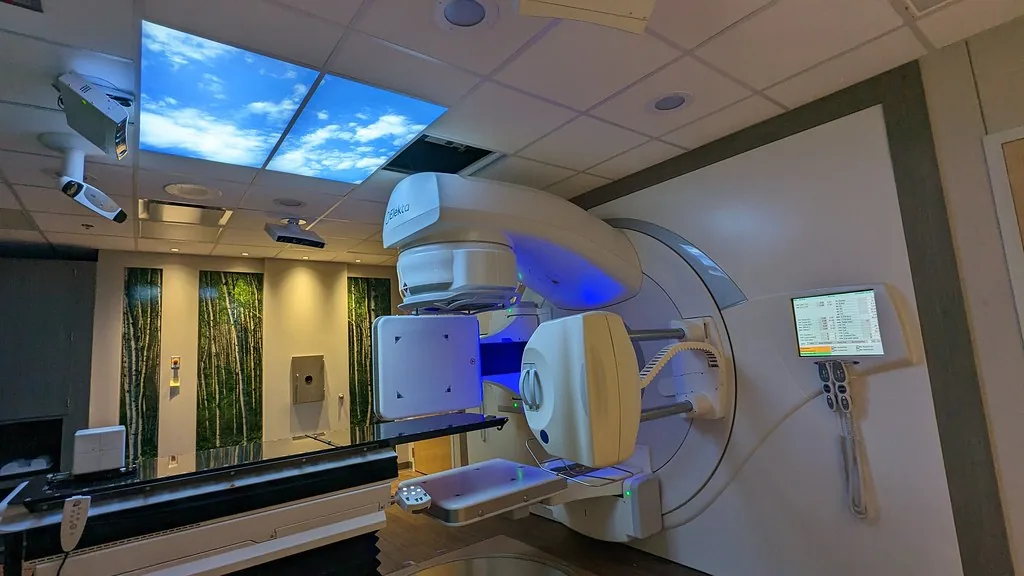
How radiation oncology compares with other specialties
Brachytherapy is often delivered alongside other specialists, so it is useful to see where radiation oncology sits next to them. All figures in this table are from the same Doximity 2026 report.
| Specialty | Average annual compensation (Doximity 2026) | Why it is relevant to brachytherapy |
|---|---|---|
| Neurosurgery | $829,161 | Highest-paid specialty in the report |
| Radiation oncology | $613,837 | Prescribes and delivers brachytherapy |
| Radiology | $609,684 | Imaging used to guide and plan implants |
| Urology | $566,740 | Often places prostate needles with the oncologist |
| Oncology | $519,715 | Medical oncology: drug treatment alongside radiation |
| Hematology | $446,700 | Twentieth in the report's top-20 list |
| Family medicine | $325,040 | Among the 20 lowest-paid in the report |
| Pediatrics | $273,665 | Among the 20 lowest-paid in the report |
Two points stand out. First, radiation oncology and diagnostic radiology are almost level, about $4,000 apart. Second, radiation oncology averages roughly $94,000 more than medical oncology in this survey, although the two specialties train and practise very differently.
The same report shows how much geography and gender matter across medicine as a whole. Among the 60 metropolitan areas it analysed, average physician pay ranged from $381,424 in Durham-Chapel Hill, North Carolina, to $495,617 in Oklahoma City. And it reports a 26% gender pay gap across all physicians in 2025, with men's model-adjusted average compensation $122,276 higher than women's. Those are all-specialty figures: the public report does not give a metro table or a gender gap for radiation oncology alone.
Why federal wage data has no radiation oncologist line
For most health professions the cleanest pay source is the US Bureau of Labor Statistics (BLS). For radiation oncologists it does not help much. The BLS Occupational Outlook Handbook reports a median annual wage of $275,930 for physicians and surgeons in May 2025 and lists some specialties separately, for example radiologists at $420,860. Radiation oncologists are not listed. They fall inside a catch-all group, "physicians, all other", whose median was $265,930.
That catch-all figure is not a radiation oncologist salary and should not be quoted as one. It mixes many unrelated specialties. The BLS figures also cover employed workers and exclude the self-employed, which matters in a field where some doctors are practice owners.
| Source | What it measures | Radiation oncology figure | Main limitation |
|---|---|---|---|
| Doximity 2026 | Self-reported average, full-time physicians, 2025 | $613,837 | Voluntary survey; no public breakdown by practice type |
| Medscape 2026 | Self-reported average, 29 specialties | Not published | Radiation oncology is not in the ranking |
| BLS (May 2025) | Employer-reported median wages | Not published | Grouped into "physicians, all other" ($265,930) |
| MGMA, AAMC faculty and similar benchmarks | Employer and medical school data | Not reproduced here | Sold or restricted to subscribers; we could not verify a public figure |
The last row matters in practice. Hospitals and medical schools usually set offers against paid benchmark surveys rather than the free reports above. We have not seen those datasets and do not quote them. If an employer cites one, ask which survey, which year and which percentile.
Does doing brachytherapy pay more?
No source we found measures it. None of the surveys above asks whether a radiation oncologist performs brachytherapy, so there is no evidence-based "brachytherapy premium" and no verified salary for a brachytherapy-focused doctor. Anyone quoting one is guessing.
What can be shown is how Medicare values the physician's work on individual brachytherapy services. Our brachytherapy cost guide lists the 2026 national professional fees from the CMS Physician Fee Schedule. A few examples:
| CPT code | Service | 2026 national physician fee in a facility |
|---|---|---|
| 77770 | HDR session, 1 channel (professional component) | $101.87 |
| 77771 | HDR session, 2 to 12 channels (professional component) | $199.40 |
| 77772 | HDR session, more than 12 channels (professional component) | $280.90 |
| 77778 | Complex interstitial application, e.g. prostate seeds (professional component) | $459.93 |
| 57155 | Uterine tandem and ovoid insertion | $238.48 |
| 55875 | Prostate needle or catheter placement | $687.72 |
These are payments to the practice or employer for one service to one Medicare patient, not income to the doctor. Whether brachytherapy work raises an individual's pay depends on the contract: a salaried academic may see no difference, while a doctor paid on productivity units may. The difference between HDR sessions and a one-off seed implant is explained in HDR vs LDR brachytherapy.
The training years: resident pay, debt and board fees
The headline average arrives late. According to the American Board of Radiology (ABR), certification in radiation oncology requires a year of accredited clinical training followed by a four-year radiation oncology residency, so a US trainee spends five postgraduate years as a resident after four years of medical school. Residents are paid a stipend set by their hospital and by postgraduate year, not by specialty.
The AMA, reporting the AAMC's 2025 Survey of Resident/Fellow Stipends and Benefits (data as of 1 July 2025), gives these national average stipends:
| Postgraduate year | Stage for a radiation oncology trainee | Average stipend, 2025 |
|---|---|---|
| PGY-1 | Clinical (intern) year | $68,166 |
| PGY-2 | Radiation oncology residency, year 1 | $70,499 |
| PGY-3 | Residency, year 2 | $73,301 |
| PGY-4 | Residency, year 3 | $77,593 |
| PGY-5 | Residency, year 4 | $81,807 |
Added together, five years at those 2025 averages come to $371,366 before tax, which is less than two-thirds of one year at the Doximity attending average. Stipends also vary by region: the same survey's weighted averages for first-year residents ranged from $65,076 in the South to $77,649 in the West. First-year stipends grew 2.2% in 2025, the slowest in four years, and fell 0.48% after inflation, according to the AMA's summary.
Debt and the cost of getting there
The AAMC reports median education debt of $215,000 for the medical school class of 2025, and a median four-year cost of attendance of $297,745 at public schools and $408,150 at private schools for the class of 2026. Those figures apply to all medical graduates, not radiation oncology specifically.
Board certification fees
The ABR's fee page lists, for initial certification in radiation oncology, an application fee of $640, a qualifying exam fee of $1,240 and an oral exam fee of $1,280, which is $3,160 in total if each is paid once. After certification, the annual continuing certification fee is $340. The ABR page does not state an effective date for these fees; we read it on 23 November 2026. The ABR and other certifying bodies are listed in our brachytherapy directory.
Many doctors who want a procedural focus then add a brachytherapy fellowship or short course. Those routes, and what is known about their funding, are covered in brachytherapy training and fellowships.
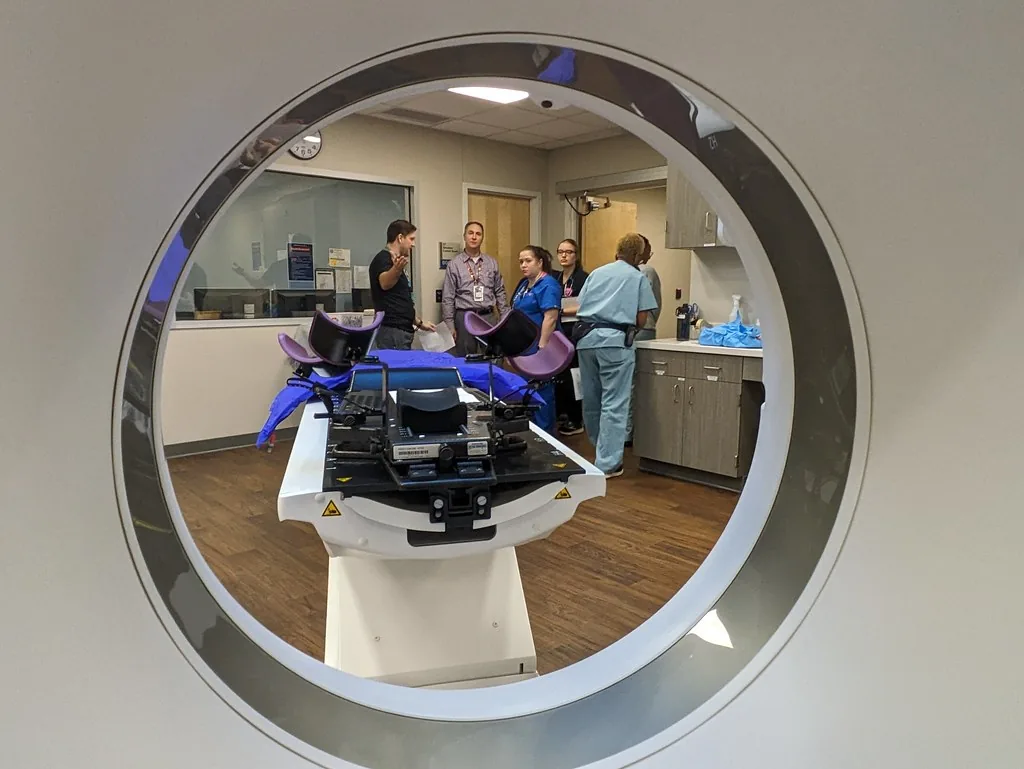
What changes in 2027: the Medicare fee schedule
Medicare matters to this specialty: the impact table in the Medicare physician fee schedule rule lists $1,603 million a year in allowed charges for radiation oncology. The final rule that sets physician payment for 2027 takes effect on 1 January 2027; ASTRO, the US radiation oncology society, reported on it on 9 November 2026, and its summary gives the key numbers. ASTRO and its 2027 annual meeting are in our directory and events calendar.
| Item | 2026 | 2027 | Change |
|---|---|---|---|
| Conversion factor, most clinicians | $33.4009 | $32.6286 | About -2.3% |
| Conversion factor, qualifying APM participants | $33.5675 | $32.9548 | About -1.8% |
| Weekly treatment management (CPT 77427) | $196.73 | $186.96 | -4.97% |
| Complex treatment planning (CPT 77263) | $169.34 | $161.51 | -4.62% |
| SBRT management (CPT 77435) | $644.97 | $614.72 | -4.69% |
| Treatment delivery, level 3 (CPT 77412, freestanding centres) | $391.46 | $473.77 | +21.03% |
The conversion factor is the dollar value of one relative value unit, so when it falls, every physician service pays less unless its units rise. ASTRO attributes the drop to the expiry of a one-year 2.5% increase that applied only in 2026. Its table of frequently billed codes shows physician work codes such as weekly management falling by 4% to 6%, while payments for treatment delivery in freestanding centres rise sharply.
ASTRO's impact table puts the combined effect on radiation oncology at +2% of total allowed charges: +4% for services in non-facility settings such as freestanding centres, and -2% for services in facilities such as hospitals. In other words, the rule moves money toward centres that own the equipment and away from the professional fees that hospital-based doctors bill.
ASTRO's table of frequently billed codes does not include the brachytherapy codes, so we cannot give verified 2027 payments for them here. A change in Medicare rates is also not a change in salary. It alters the revenue behind a job and tends to reach contracts later, at renewal.
United Kingdom: clinical oncologist pay
In the UK the doctors who deliver brachytherapy are clinical oncologists, and NHS pay follows national scales rather than surveys. The figures below are for England, as listed by the British Medical Association (BMA) on its pay pages, which reference Pay and Conditions Circular (MD) 1/2026.
| Stage | Grade | Basic pay (England) |
|---|---|---|
| First year after medical school | FY1 | £41,226 |
| Second foundation year | FY2 | £47,610 |
| Core training | CT1 to CT2 | £55,355 |
| Specialty training, early years | ST3 to ST5 | £67,325 to £67,998 |
| Specialty training, later years | ST6 to ST8 | £76,582 to £77,348 |
| Consultant, on appointment | Threshold 1 | £113,565 |
| Consultant, after 3 and 4 years | Thresholds 2a and 2b | £120,249 and £123,672 |
| Consultant, after 8 years | Threshold 3 | £135,645 |
| Consultant, after 14 years | Threshold 4 | £150,569 |
These are basic salaries. Any additional payments, for example for out-of-hours or on-call work, are not included, and private practice income is separate. The BMA page for consultants was marked as being updated when we read it, so check it for the current year's circular. Scotland, Wales and Northern Ireland publish their own scales.
Because every consultant in England is on the same scale whatever the specialty, a clinical oncologist who does brachytherapy is paid the same basic salary as one who does not. The UK professional bodies and regulators, including the Royal College of Radiologists, are linked in our directory.
What moves an individual salary
The published sources do not quantify these factors for radiation oncology, so read this as a list of questions rather than a set of multipliers.
- Employment model. Salaried academic, hospital-employed and private-practice partnership roles are paid in different ways. The Medicare rule above shows why ownership of the technical side can matter.
- How productivity is counted. Many US contracts tie part of pay to work relative value units. Ask whether brachytherapy procedures, which take theatre time, are credited fairly against clinic and external beam work.
- Location. Doximity's all-physician metro figures differ by more than $114,000 between the highest and lowest of the 60 areas analysed.
- Seniority. NHS pay rises by threshold with years as a consultant. US surveys we read do not publish a seniority curve for radiation oncology.
- The job market. An ASTRO workforce taskforce review published in March 2023 concluded that, in the most likely scenario, the supply of radiation oncologists and demand for radiation therapy would stay in relative balance through 2030, with growth in Medicare beneficiaries and physician productivity as the main uncertainties.
Pay for the rest of the team, including medical physicists, dosimetrists and radiation therapists, is covered in our companion guide to brachytherapy team salaries.
Questions to ask before you sign
- Which benchmark survey, year and percentile is this offer based on?
- Is pay a fixed salary, productivity-based, or a mix, and how are brachytherapy procedures credited?
- Does the practice own its treatment equipment, and is there a route to partnership or a share of technical revenue?
- How many brachytherapy cases does the department treat each year, at which sites, and who else does them?
- Is there protected time and funding for courses and conferences, such as those in our events calendar?
- What is the on-call commitment, and how many sites will I cover?
- How has the contract been adjusted in previous years when Medicare rates changed?
FAQ
How much does a radiation oncologist make in the US?
The Doximity Physician Compensation Report 2026 puts average annual compensation for radiation oncology at $613,837, the seventh-highest specialty, based on surveys completed in 2025 by full-time US physicians. It is a self-reported average, not a base salary, and individual pay varies with employer, location and contract.
What is a brachytherapist's salary?
There is no official figure. "Brachytherapist" is not a job category in any pay survey or government dataset we found. The doctors who perform brachytherapy are radiation oncologists (clinical oncologists in the UK), and published pay data does not separate those who do brachytherapy from those who do not.
Do radiation oncologists earn more than medical oncologists?
In the Doximity 2026 report, yes on average: $613,837 for radiation oncology against $519,715 for oncology. Medscape's 2026 report lists oncology and hematology at $464,000 but does not rank radiation oncology separately, so the comparison cannot be repeated there.
How much do radiation oncology residents earn?
Residents are paid by postgraduate year, not by specialty. The AAMC's 2025 survey, as reported by the AMA, gives national average stipends of $68,166 in the first year rising to $81,807 in the fifth. Radiation oncology training in the US is one clinical year plus a four-year residency.
How much does a clinical oncologist earn in the UK?
NHS consultants in England are paid on a national scale. The BMA lists basic pay of £113,565 on appointment, rising through thresholds to £150,569 after 14 years as a consultant. Additional payments and private practice are not included, and the other UK nations have their own scales.
Will Medicare changes in 2027 cut radiation oncologist pay?
They change practice revenue rather than salary directly. According to ASTRO's summary of the 2027 final rule, the conversion factor falls from $33.4009 to $32.6286 for most clinicians, professional codes such as weekly treatment management fall by about 5%, and the overall impact on radiation oncology is +2%, with gains in freestanding centres and a 2% reduction for facility-based services.
Sources
- Doximity — Physician Compensation Report 2026 (specialty averages, methodology, metro areas, gender pay gap) (accessed 23 November 2026)
- Becker's Hospital Review — The 20 physician specialties with the highest, lowest annual compensation in 2026 (27 August 2026) (accessed 23 November 2026)
- Becker's ASC Review — The 20 highest-paying physician specialties in 2025 (Doximity 2025 report; 1 August 2025) (accessed 23 November 2026)
- AuntMinnie — Radiology, radiation oncology among highest paid medical specialties (Doximity 2024 report; 23 May 2024) (accessed 23 November 2026)
- Becker's Hospital Review — 29 physician specialties ranked by annual compensation: Medscape (10 April 2026) (accessed 23 November 2026)
- US Bureau of Labor Statistics — Occupational Outlook Handbook: Physicians and Surgeons (May 2025 wages) (accessed 23 November 2026)
- American Medical Association — Resident physician pay still rising, but growth trails inflation (AAMC 2025 stipend survey; 22 January 2026) (accessed 23 November 2026)
- AAMC — You Can Afford Medical School (median education debt and cost of attendance) (accessed 23 November 2026)
- American Board of Radiology — Initial Certification Fees and Payments (accessed 23 November 2026)
- American Board of Radiology — Annual Continuing Certification Fees (accessed 23 November 2026)
- ASTRO — 2027 Medicare Physician Fee Schedule Final Rule Summary (PDF) (accessed 23 November 2026)
- ASTRO — CMS releases 2027 HOPPS and MPFS final rules (9 November 2026) (accessed 23 November 2026)
- British Medical Association — Pay scales for consultants in England (accessed 23 November 2026)
- British Medical Association — Pay scales for resident doctors in England (accessed 23 November 2026)
- ASTRO — Radiation oncology workforce expected to remain stable through 2030 (workforce taskforce review; 8 March 2023) (accessed 23 November 2026)
Educational content, not financial, legal or career advice. Survey figures are self-reported averages and official pay scales change every year; check the linked sources and your own contract before making decisions. Written by the brachytherapist.com editorial team from the sources listed above.